
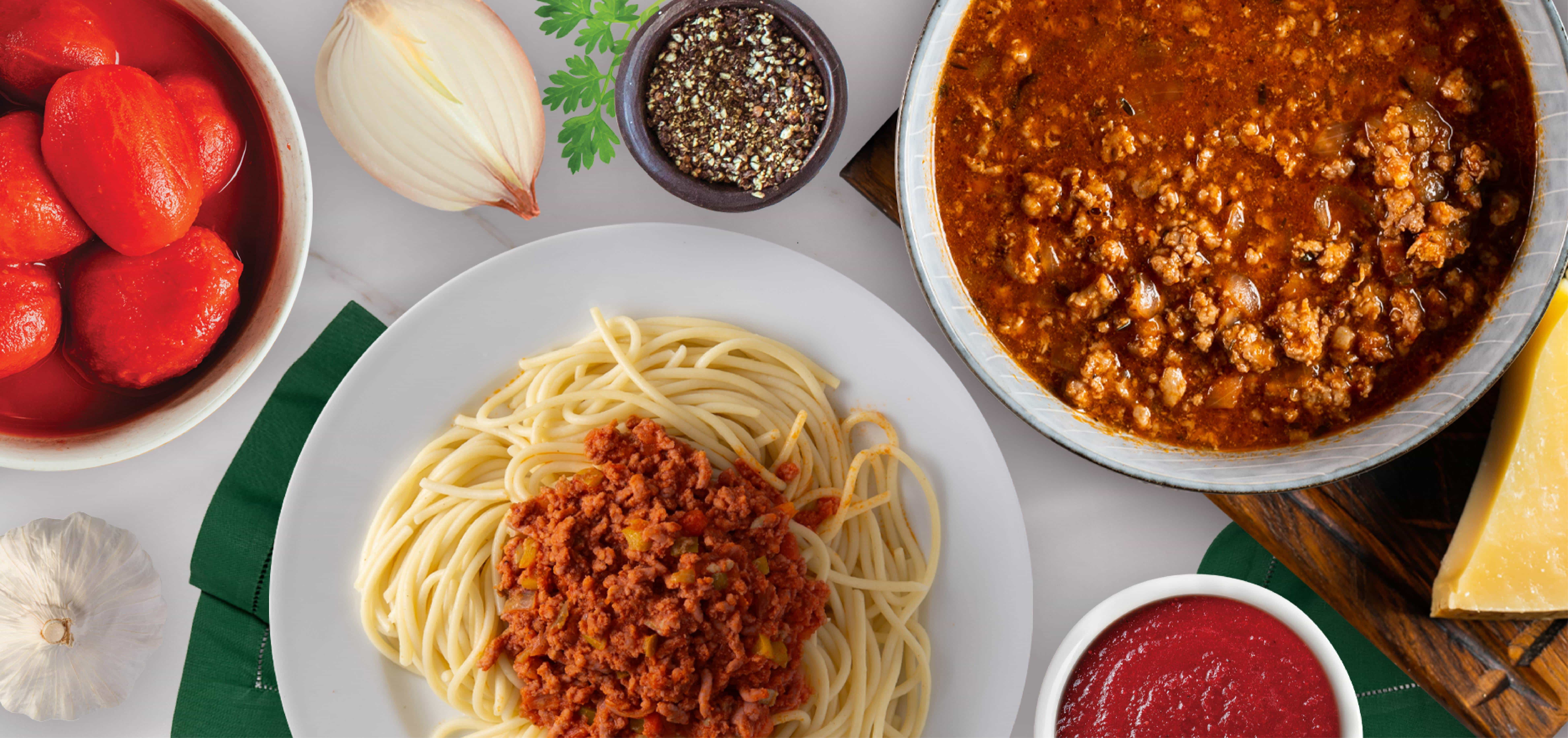
In Italian cooking, meat sauces vary widely in flavor and technique. “Ragù” is a broad term referring to many regional meat sauces, while “Bolognese” is a specific, refined version from Bologna. Understanding the differences in ingredients, texture, and preparation helps you choose the right sauce for your dish.
Whether you prefer Genovese, Napoletana, or Bolognese, using Tuttorosso Tomatoes to make any ragù is a great choice. Why? Because they’re the best-selling Italian-inspired canned tomatoes in the United States! Picked at the peak of freshness, the quality comes through in every can.
What Is Ragù?
Ragù is an umbrella category of Italian meat sauces that combine ground or chopped meat with tomatoes, aromatics, and wine. The exact formula shifts dramatically across Italy.
Origins of Ragù
Ragù traces its history to eighteenth-century Italy and takes its name from the French word ragoût, which means “to stimulate the appetite.” The earliest versions did not include tomatoes. As tomatoes spread through Italian cuisine, they became a staple in many ragù variations.
Regional Variations Across Italy
Ragù changes character depending on the region:
- Emilia-Romagna: A creamy, mellow ragù made with butter and milk, with only a small amount of tomato.
- Naples: A deeply flavored, tomato-forward sauce simmered for hours with red wine and whole cuts of meat.
- Sicily: A version shaped by local ingredients such as eggplant, seafood, or warm spices.
Each style reflects the landscape and traditions of its region.
What Is Bolognese?
Bolognese, also called Ragù alla Bolognese, is a slow-cooked meat sauce from Bologna. It begins with a soffritto of finely diced vegetables, then builds flavor with ground beef, pork, white wine, milk, and a modest amount of tomato. The result is a cohesive, creamy sauce that clings to pasta.
Traditional pairings include fresh egg pastas such as tagliatelle, as well as lasagne alla bolognese. To create your own version to pair with your favorite pasta, check out our Slow Cooker Bolognese Sauce recipe.
The Birth of Ragù alla Bolognese
Bologna is often considered a culinary hub, and its signature ragù reflects that heritage. The classic recipe sautés soffritto with finely chopped meat. Tomato paste, wine, and milk are added gradually to create a balanced, velvety sauce.
Spaghetti Bolognese vs. Authentic Bolognese
“Spaghetti Bolognese,” as known internationally, is not an Italian dish. In Bologna, this sauce is served with wide egg noodles such as tagliatelle because their texture captures the sauce effectively. Outside Italy, the term “Bolognese” broadened to describe almost any tomato-and-meat sauce, especially those served with spaghetti.
Ingredients and Technique: Key Differences
The Meat Base
Ragù can include many combinations of meat, such as beef, pork, veal, sausage, or poultry.
Authentic Bolognese is more structured. It traditionally uses finely minced beef enriched with pancetta for added depth and richness.
Tomato Content
Many ragùs, especially from central and southern Italy, rely heavily on tomatoes, which give them a bold, bright flavor. Bolognese uses tomato in moderation. A small amount of paste enhances the sauce without overshadowing the meat.
Wine and Dairy
General ragùs often incorporate red wine and usually exclude dairy. Authentic Bolognese uses white wine, which keeps the flavor lighter, and milk, which softens acidity and creates a silky consistency.
Seasoning and Cooking Method
Both ragù and Bolognese typically begin with soffritto. Ragùs may use herbs such as basil, bay leaf, or oregano. Bolognese keeps the seasoning minimal, often limited to salt, pepper, and a touch of nutmeg. Long, slow cooking is essential for both styles and allows the meat to tenderize and meld with the aromatics.
Texture and Flavor Profile
Ragù’s Bold Tomato Intensity
Ragù tends to be hearty, chunky, and full of tomato flavor. The tomatoes contribute acidity that balances the richness of the meat, creating a vibrant and satisfying sauce.
Bolognese’s Creamy Depth
Bolognese is smoother and more unified in texture. Milk softens the acidity of the tomatoes and produces a warm, rounded sauce with a gentle sweetness that highlights the meat
Regional Roots and History
Ragù’s National Spread
By the middle of the twentieth century, ragù had become a cherished Sunday meal throughout Italy. Each region adapted it to local ingredients, resulting in a wide spectrum of ragù styles.
Bolognese’s Protected Heritage
To preserve its identity, Bologna registered the official recipe for Ragù alla Bolognese in 1982 through the Accademia Italiana della Cucina. The codified version specifies the required ingredients and preparation techniques.
The Pasta Pairing Tradition
In Bologna, Bolognese is paired with fresh egg tagliatelle. The wide ribbons catch and hold the sauce, creating balanced bites. Other ragùs pair well with many shapes, including rigatoni, pappardelle, polenta, or gnocchi.
Serving Suggestions and Pairings
Best Pasta for Ragù
Ragù pairs best with sturdy shapes, including rigatoni, penne, and pappardelle. These cuts grip the sauce well and complement its hearty texture. Ragù also works beautifully in baked dishes such as lasagna.
Best Pasta for Bolognese
Fresh tagliatelle is the traditional choice for Bolognese because its wide, porous surface holds the sauce. Fettuccine is a good alternative. Spaghetti is not recommended, since its texture does not hold the sauce effectively.
Non-Pasta Pairings
Both ragù and Bolognese work well beyond pasta.
- Bolognese pairs beautifully with creamy polenta or baked potatoes.
- Tomato-rich ragù shines in baked gnocchi or layered casseroles.
Common Misconceptions
“Ragù and Bolognese Are Completely Different”
Bolognese is not separate from ragù. It is one specific regional version within the larger ragù family.
“Bolognese Is Just Meat Sauce”
Authentic Bolognese relies on milk and only a small amount of tomato. The result is not the thick, red meat sauce often labeled as “Bolognese” outside Italy.
“It’s Always Served With Spaghetti”
Traditional Bolognese is served with tagliatelle or other wide egg pasta, never spaghetti.
The Final Word: Ragù vs. Bolognese
Ragù encompasses a wide range of Italian meat sauces, while Bolognese represents Bologna’s refined, codified version of the dish. Ragù is typically tomato-forward and hearty. Bolognese focuses on creaminess, balance, and a more subtle tomato presence. Knowing these distinctions helps you choose the ideal sauce for the dish you want to create.
Related Products
-
Fire Roasted Petite Diced Tomatoes 14.5 oz 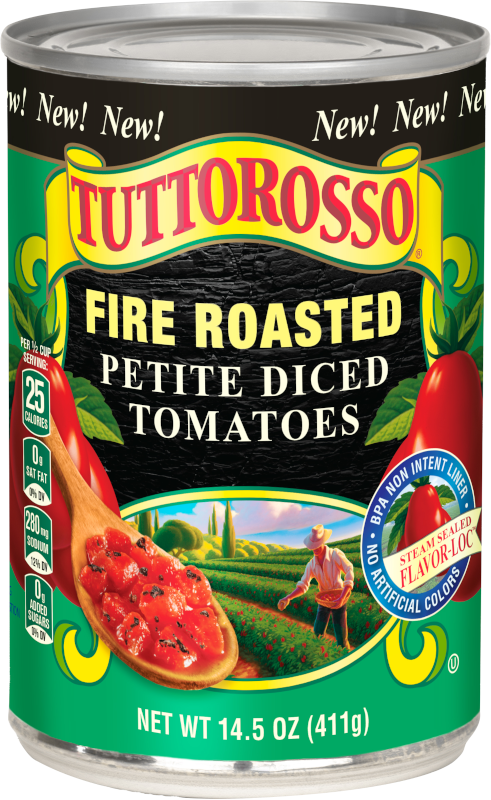
Fire Roasted Petite Diced Tomatoes 14.5 oz
-
Fire Roasted Tomato Paste 6 oz 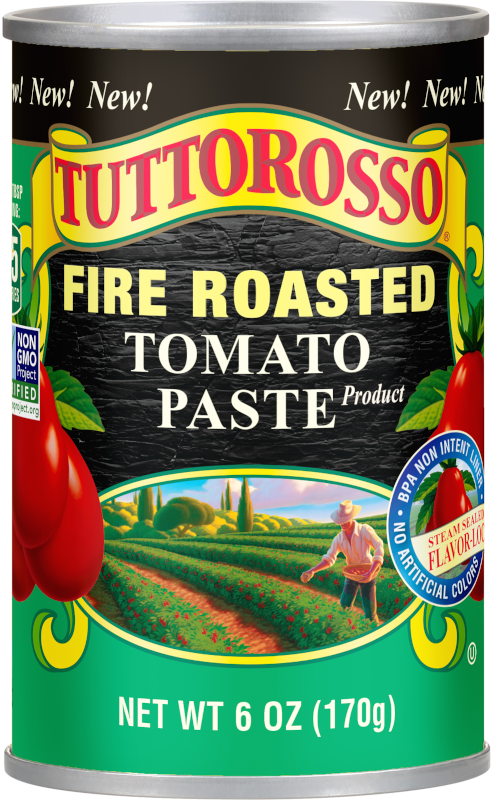
Fire Roasted Tomato Paste 6 oz
-
Fire Roasted Petite Diced Tomatoes with Roasted Garlic 14.5 oz 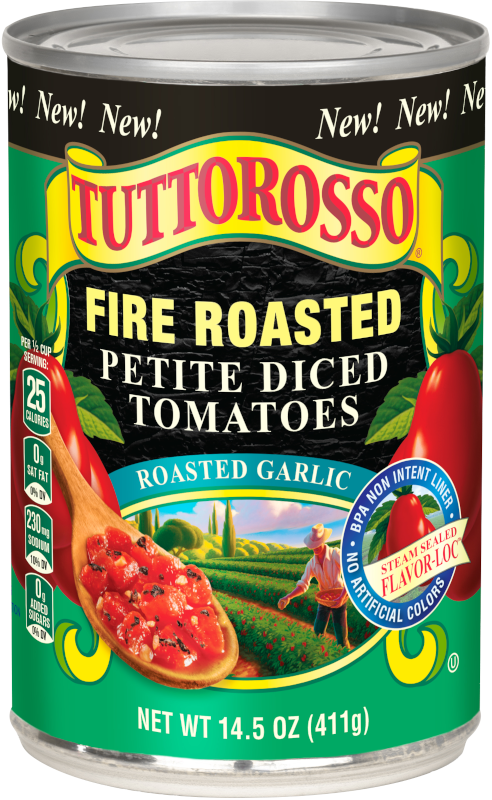
Fire Roasted Petite Diced Tomatoes with Roasted Garlic 14.5 oz
Related Recipes
-
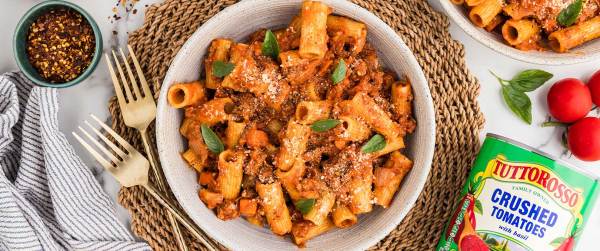
Weeknight Bolognese
This Weeknight Bolognese delivers the slow-simmered flavor of the classic in a fraction of the time. Tuttorosso Crushed Tomatoes with Basil form the base of the sauce, while calabrian chilis...
-
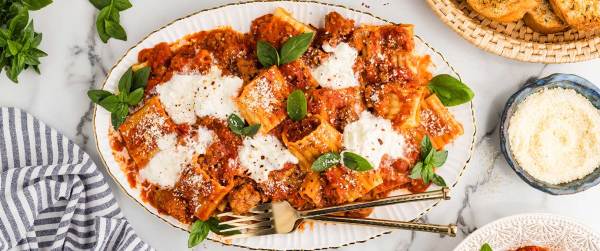
Italian Sausage & Burrata Paccheri
This Italian Sausage & Burrata Paccheri features a rich tomato sauce made with savory Italian sausage, Tuttorosso Crushed Tomatoes with Roasted Garlic, and Tuttorosso Diced Tomatoes with Basil, Garlic &...
-
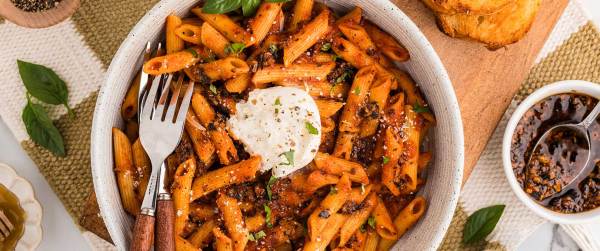
Gochujang Tomato Burrata Pasta
This is the kind of pasta you make when you want something that tastes like a whole production but takes about 15 minutes. Gochujang and chili crisp bring the heat,...